Swim
Chlorine Resistant Swimwear: Which Fabrics Really Last
Last updated
Back to blog
Polyester and PBT last longest in chlorine. The fashion fabrics we cut and print every day, Carvico VITA and Brisbane Rec, are nylon or polyester blended with standard elastane. That elastane is what chlorine breaks first. So choosing a chlorine resistant swimwear fabric means choosing how much stretch you’ll trade for durability. But the fabric is only part of it. Whether a suit survives a summer of laps also depends on the thread, the elastic and what you promise on the label. Here’s how we’d sort it, style by style.
What makes swimwear fabric chlorine resistant?
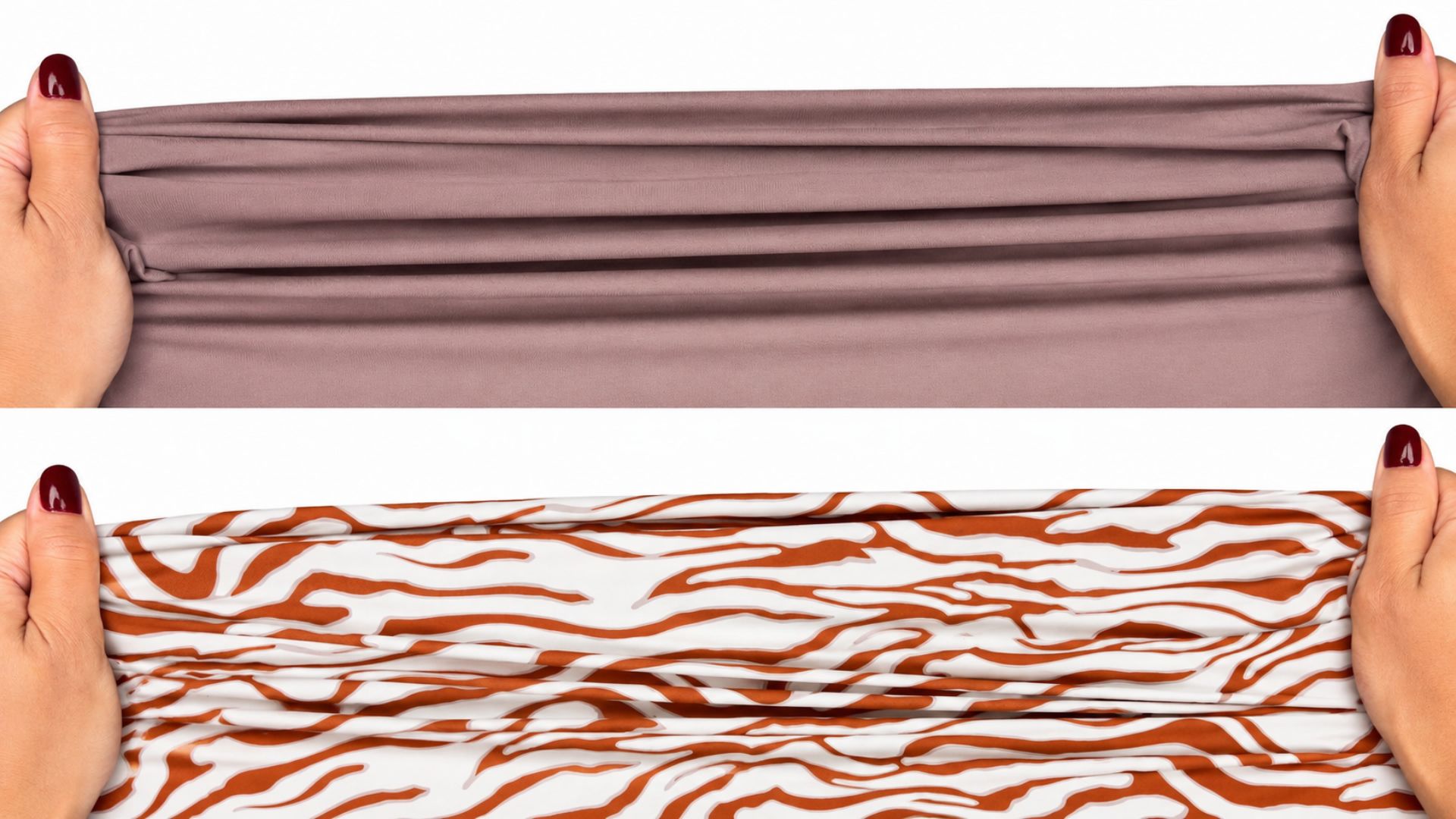
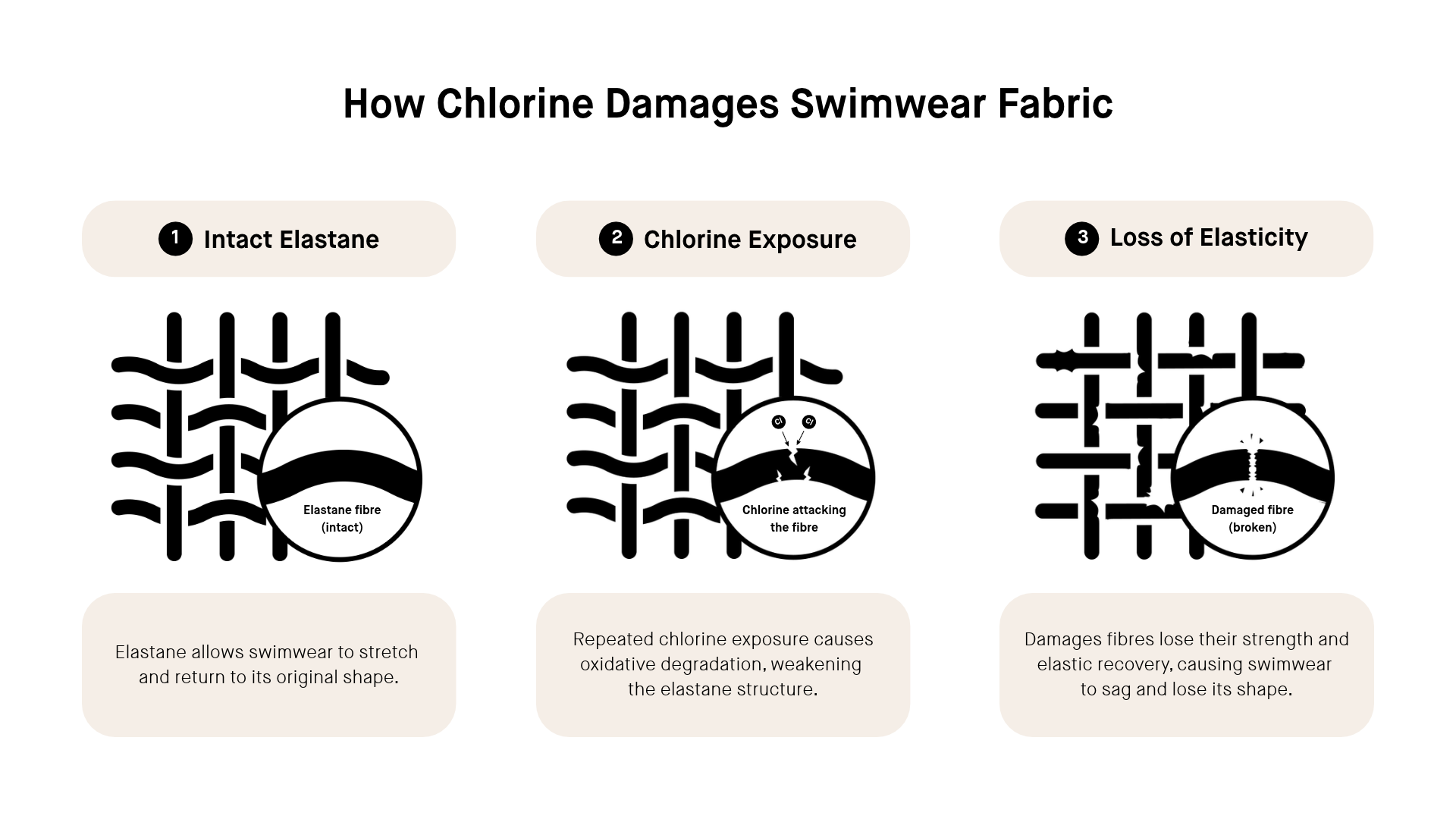
Chlorine breaks down elastane, the fiber that gives swimwear its stretch. A fabric resists chlorine in one of two ways: it uses less elastane, or it uses a stretch fiber that chlorine can’t break as easily.
Chlorine also attacks the urethane links that hold elastane together, so the stretch fails before anything else does. The suit stops snapping back, even if the color and surface still look fine.
The fixes follow from that. Polyester-based fabrics with little or no elastane give chlorine less to attack. PBT, a type of polyester with some built-in stretch, has chemical bonds that stay stable in chlorine. Upgraded elastanes also exist, and we cover them below, but even those don’t match a polyester and PBT blend.
The trade-off is feel. Less elastane means a firmer, smaller-feeling suit, especially when it’s dry. That matters for fit, and we come back to it in the section on why chlorine resistant swimwear feels tighter.
Which chlorine resistant swimwear fabric lasts longest?
100% polyester and PBT blends last longest in chlorine. Nylon or polyester with elastane gives up some of that lifespan for softer stretch. Our two main bases, VITA and Brisbane Rec, still carry a chlorine resistant rating from the mill. For most fashion and resort ranges, that’s the right trade.
There’s no single best chlorine resistant swimwear fabric. There’s the best one for how a suit gets worn.
How the main options compare:
| Fiber blend | Stretch and feel | Chlorine resistance | Printed in-house at Bali Swim | Best for | Bali Swim stocks it |
|---|---|---|---|---|---|
| Nylon + standard elastane (Carvico VITA, 78/22) | 22% elastane, the most stretch here | Mill-rated chlorine resistant; Carvico claims over twice competitor fabrics | No, prints go on Brisbane Rec | Solids for resort and everyday pool | Yes |
| Polyester + standard elastane (Carvico Brisbane Rec, 82/18) | 18% elastane, slightly firmer | Mill-rated chlorine resistant; Carvico says made for chlorine resistance | Yes, our print base | Printed resort and everyday pool styles | Yes |
| Nylon or polyester + upgraded elastane (e.g. LYCRA Xtra Life) | Elastane-based stretch | Better than standard elastane, per the fiber maker; below polyester and PBT | No, prints go on Brisbane Rec | Brands that want stretch plus a named fiber | No |
| Polyester + PBT | Less stretch, firmer | Among the longest lasting | No, prints go on Brisbane Rec | Training and aqua fitness | No |
| 100% polyester | Little stretch, firmest | One retailer rates it at 200+ hours | No, prints go on Brisbane Rec | Training and heavy pool use | No |
What is PBT, and why do training suits use it?
PBT is a type of polyester that gives up some stretch in exchange for chlorine resistance. Its chemical bonds stay stable in chlorine, where elastane’s break down. That’s why a major training swimwear line uses it. One large sports retailer’s training fabric is polyester-based, with PBT in place of elastane.
The catch is comfort. PBT suits feel firmer than fashion swimwear, which suits a lap swimmer more than a resort guest.
Is polyester swimwear chlorine resistant?
Yes. 100% polyester is one of the longest-lasting fabrics in chlorine, and blended polyester like our print base carries the mill’s chlorine resistant rating. Our print base, Carvico Brisbane Rec, is 82% recycled polyester and 18% standard elastane. Carvico describes it as made for durability and resistance to chlorine and pilling.
Blended polyester still has elastane in it, so it isn’t the same as a 100% polyester training suit. If you’re weighing nylon against polyester for feel or print, our guide to the best fabric for swimwear covers that side.
What is LYCRA Xtra Life?
LYCRA Xtra Life is a branded elastane made to last longer in the pool. LYCRA says swimwear made with it is more durable and resists chlorine, UV and sunscreen, though its page gives no numbers. In 2014, its then owner Invista reported 8,800 hours of garment testing with no breakage.
Even so, an upgraded elastane doesn’t match a polyester and PBT blend. To be plain about our own range: our stocked fabrics use standard elastane, not Xtra Life. Their chlorine resistant tags come from the mills’ spec sheets, and Carvico makes its own durability claims for both.
Chlorine resistant vs chlorine proof: what is the difference?
“Chlorine resistant” means a fabric outlasts standard swimwear fabric in chlorine. “Chlorine proof” suggests it can’t be damaged at all, and no fabric works that way. Even the toughest options, polyester and PBT, wear out eventually.
Look at how 100% polyester gets rated. One large sports retailer gives it more than 200 hours of use. That’s a long life, but it has an end point, and that’s the opposite of “proof.”
None of our fabrics carries an hour rating. Their chlorine resistant tags come from the mills’ spec sheets, and we don’t run chlorine tests in-house. If a supplier sells you “chlorine proof,” ask to see the test behind the word.
How long does chlorine resistant swimwear last?
There’s no single number. Online claims range from three to ten times longer than standard swimwear, and none of those cites a test. The hour ratings that do come with tests are from fiber makers or retailers, and they test fibers or their own products, not your garment.
| Claim | Who made it | Test behind it |
|---|---|---|
| 3 to 4 times longer | A swimwear retailer | None cited |
| Up to 4 times longer | A swim shop blog | None cited |
| Up to 10 times longer | Another swimwear retailer | None cited |
| More than 200 hours (100% polyester suit) | A large sports retailer | Retail rating, method not given |
| Over 200 hours at 4 ppm chlorine, under constant stretch, no breakage | XLANCE, a fiber maker | Fiber maker lab test on fabric |
| 8,800 hours, no breakage; 50% better than the next best elastane | Invista, then owner of LYCRA, in 2014 | Fiber maker garment test, now over a decade old |
Notice that the numbers don’t even use the same unit. Some compare against an unnamed “standard” suit. Others count hours under lab conditions, like constant stretch at a fixed 4 ppm chlorine level.
The lesson for your label is simple. Don’t copy any of these numbers onto your hangtag. They describe a fiber or someone else’s product, not your suit, your thread or your elastic.
Why does chlorine resistant swimwear feel tighter?
Chlorine resistant fabrics use less elastane, or none, so they feel firmer and smaller, especially when dry. A suit cut to the same pattern in a lower-stretch fabric will fit differently.
That has a direct production consequence. Don’t copy measurements from a fashion suit and expect the same fit. Fit-test your samples in the production fabric, and try them both dry and wet. Moving a style from a high-elastane fabric like VITA to a firmer polyester or PBT base? Plan a fit round.
Is chlorine resistant swimwear worth it for a fashion or resort brand?
Yes, for the styles your customers swim in. No, for beach-only trend pieces. Most fashion and resort brands don’t need PBT at all; a mill-rated fashion fabric covers their pool styles.
The easiest way to decide is to sort your range into three groups.
- Resort and beach. Styles for lounging, photos and the occasional dip. Any fabric works here, including trend fabrics. Crinkle, corduroy, lurex and animal prints carry no chlorine resistant tag in our range, so keep them here and say “beachwear” on the care label.
- Everyday pool. Styles for resort guests who swim daily, lap swimmers, and plus-size and modest buyers who wear one suit often. Use a fabric tagged chlorine resistant. Seven of our 16 stocked fabrics are, including VITA and Brisbane Rec.
- Training. Styles for aqua fitness classes and serious lap swimming. These need 100% polyester or a PBT blend. We don’t stock either. If training is most of your range, ask every manufacturer you shortlist which polyester or PBT bases they can source, and at what minimum.
You can see every fabric we stock on our swimwear fabrics page. To see which ones carry the chlorine resistant tag, use the Fabric Explorer.
Do the thread and elastic need to be chlorine resistant too?
Yes. Standard sewing thread and elastic break down faster in chlorinated water than a chlorine-resistant fabric does. So on a pool suit made with standard trims, the seams and leg openings give out while the fabric still looks good.
None of the pages ranking for this search covers it, and it’s where a chlorine resistant claim quietly falls apart. Our own standard thread and elastic are not chlorine resistant. That’s normal for fashion swimwear, but it means a “chlorine resistant” suit is only as strong as its weakest part. If you want the whole suit to hold up, you have to ask for specialty chlorine-resistant thread and elastic.
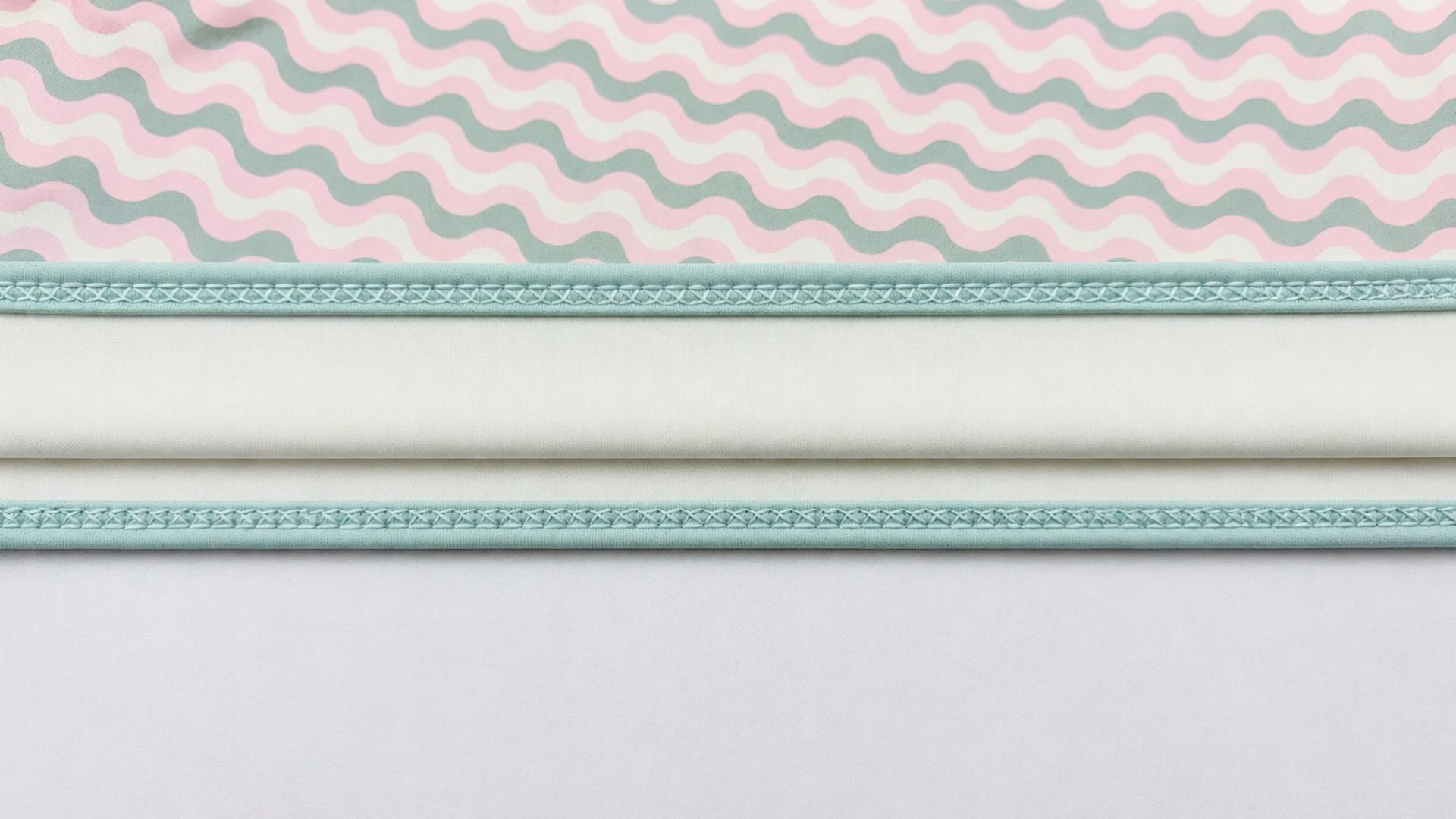
Add these lines to the tech pack for every pool or training style:
- Fabric with a chlorine resistant rating from the mill
- Specialty chlorine-resistant sewing thread
- Specialty chlorine-resistant elastic
- Lining in the same fabric as the outside, which is our standard
Ask any manufacturer you’re comparing, including us, whether they can source the thread and elastic and what it adds per piece.
Can you label your swimsuits “chlorine resistant”?
Yes, if you can back it up, and if the claim is about the fabric, not the whole suit. Use generic fiber names on the content label. Put any chlorine claim on the hangtag, and only when the mill’s spec sheet supports it.
On the content label, list fibers by their generic names. For Brisbane Rec, that’s “82% Recycled Polyester, 18% Elastane.” In the US, “elastane” and “spandex” are both accepted generic names. If you use a fiber trademark like LYCRA, the generic name must appear with it or in a footnote. Don’t use trademarked fiber names without a license. These are US rules. If you sell in the EU, UK, Middle East or Australia, check that market’s fiber labeling rules before you print.
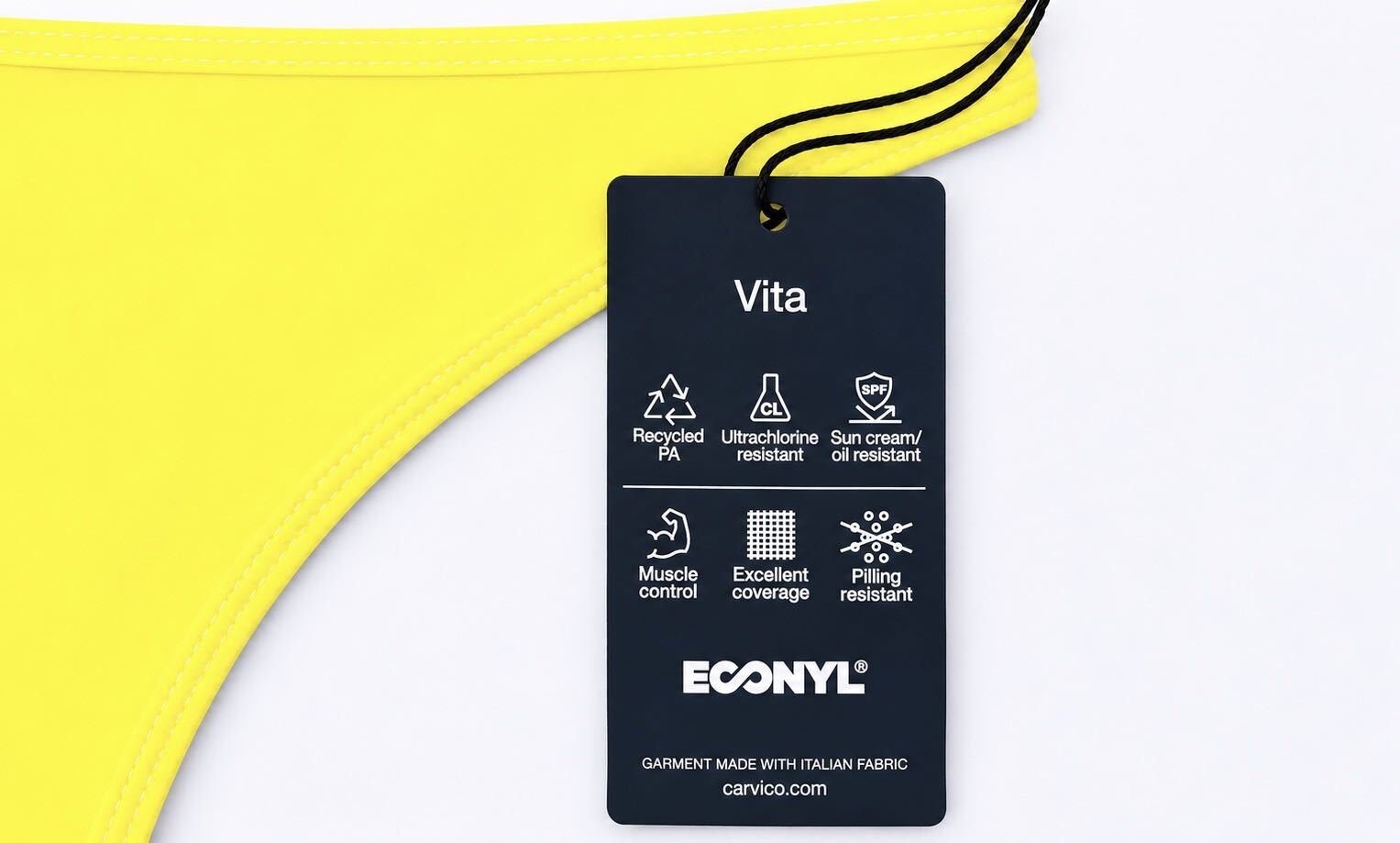
The hangtag is where you can say more. “Made with Italian Recycled Fabric” works for our fabrics. For chlorine, the wording should point at the fabric: “Made with chlorine resistant fabric.” That keeps you honest when the thread and elastic are standard and the garment hasn’t been tested.
Before you print a chlorine claim, collect this proof from the mill:
- The spec sheet showing the fabric’s chlorine resistant rating
- Which elastane the fabric uses, standard or branded
- The test method behind any number, including chlorine level, hours and whether the fabric was under stretch
- The fiber content in generic names, ready for the content label
Keep those on file in case a retailer or customer asks. Then pair the hangtag with clear care instructions; our guide on how to wash a swimsuit covers what to tell customers.
See which of our styles come in chlorine resistant fabrics.
Want to feel VITA and Brisbane Rec before you choose?
Frequently Asked Questions
- Is Carvico VITA chlorine resistant?
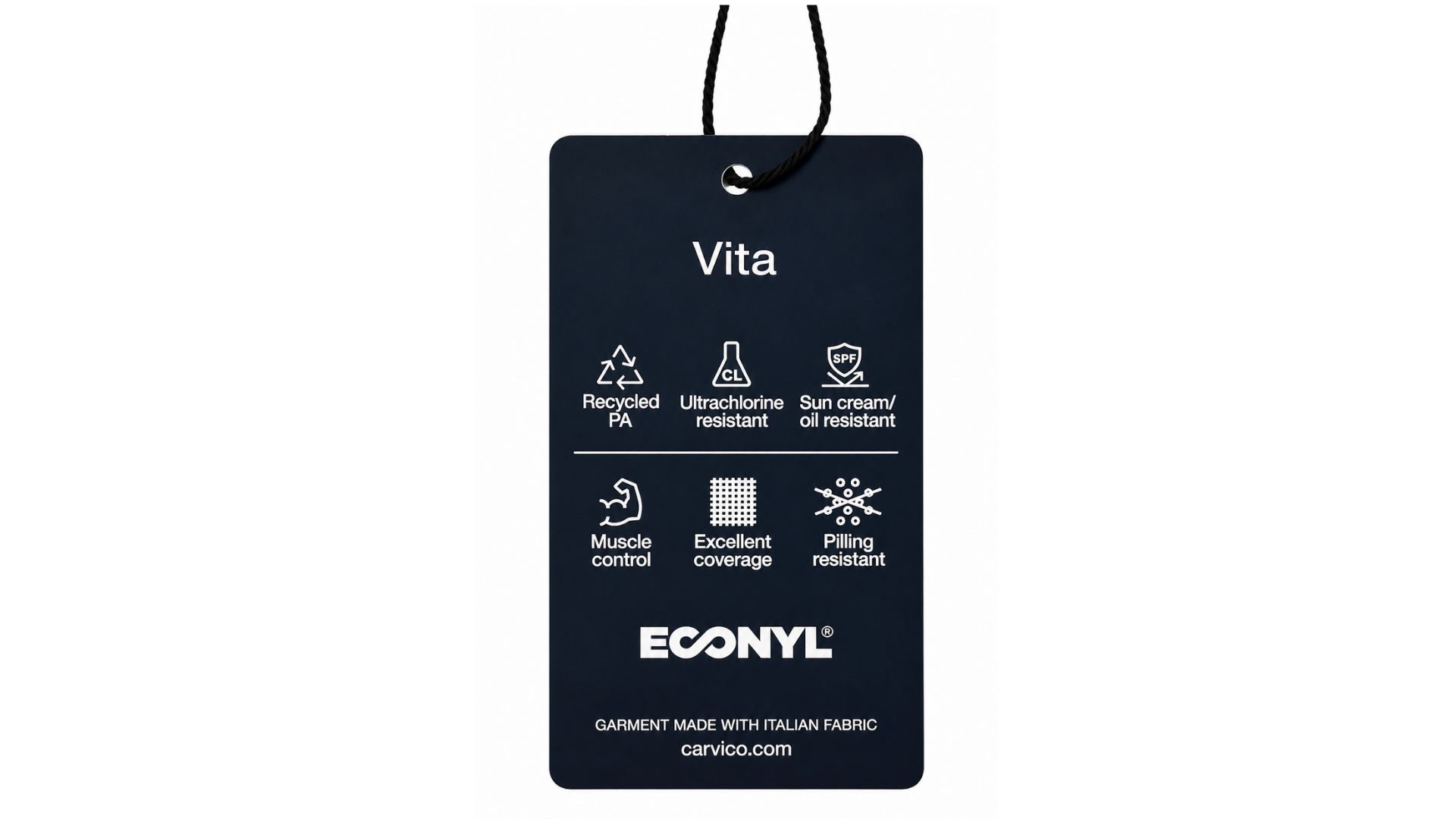
- Yes. VITA is tagged chlorine resistant based on Carvico’s spec sheet. It uses standard elastane, not a branded chlorine-resistant type. Carvico says it resists chlorine, sun creams and oils more than twice as well as competitor fabrics. It has no hour rating.
- Does “LYCRA” on a label mean a swimsuit is chlorine resistant?
- Not on its own. LYCRA makes its chlorine claim for LYCRA Xtra Life. A label that just says LYCRA tells you the brand of elastane, not how long it lasts in a pool.
- Does swimsuit lining need to be chlorine resistant?
- For a pool suit, yes, since the lining sits in the same water. We line suits with the same fabric as the outside, so the lining matches the shell’s rating.
- What is the minimum order for chlorine resistant swimwear at Bali Swim?
- In our stocked chlorine resistant fabrics, the minimum is 20 pieces per style per color or print, with no minimum per size.
- Are recycled swimwear fabrics chlorine resistant?
- Some are. VITA is 78% recycled polyamide and Brisbane Rec is 82% recycled polyester, and both are tagged chlorine resistant. Recycled content doesn’t decide it, though. The elastane does. For more, see our guide to sustainable swimwear fabrics.